
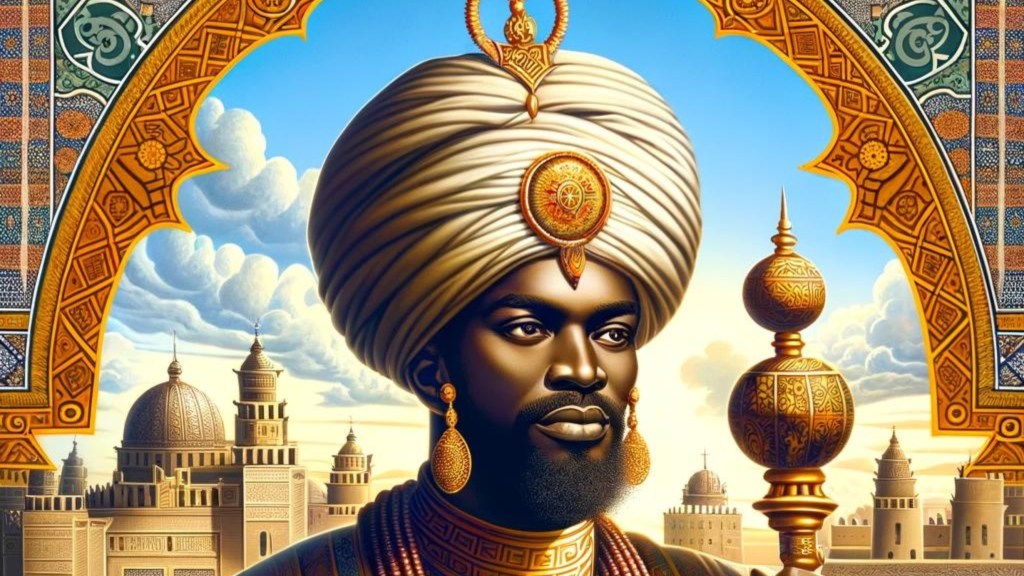
KING ASKIA THE GREAT
Early Life and Rise to Power
Askia Muhammad I, later known as Askia the Great, was born Muhammad Ture. He rose to prominence after the death of Sunni Ali Ber, the previous ruler of the Songhai Empire. Sunni Ali Ber’s successor, Sunni Baru, faced opposition due to his refusal to convert to Islam. Muhammad Ture took advantage of the dissatisfaction among the Muslim factions within the empire. He led a rebellion against Sunni Baru. Ture ultimately defeated him and became the ruler of the Songhai Empire.
Reign and Achievements
- Administrative Reforms: Askia Muhammad I is renowned for his administrative and governmental reforms. He divided the empire into provinces, each governed by a governor or “kurmina fari.” This helped in efficient administration and control over the vast empire.
- Promotion of Islam: Askia was a devout Muslim and worked tirelessly to promote Islam within the empire. He undertook a famous pilgrimage to Mecca (the Hajj) in 1497-1498. During this journey, he sought to establish diplomatic relations with other Muslim states. He also aimed to establish economic relations. His pilgrimage showcased the wealth and power of the Songhai Empire. It solidified his legitimacy as a ruler among Muslim leaders.
- Economic Growth: Under Askia’s rule, the Songhai Empire saw significant economic growth. He expanded trade routes, particularly the trans-Saharan trade, dealing in gold, salt, and other valuable goods. He also standardized weights and measures and introduced a system of taxation that boosted the empire’s revenues.
- Military Expansion: Askia the Great was also a military strategist. He expanded the empire’s territory through conquests, extending its borders to include parts of modern-day Mali, Niger, and Nigeria.
- Cultural Flourishing: His reign saw a flourishing of culture, education, and scholarship. Timbuktu and Gao became renowned centers of learning, attracting scholars and students from across the Muslim world. He established numerous schools and libraries, fostering an environment of intellectual growth and cultural exchange.
Later Life and Legacy
Askia Muhammad’s later years were marked by internal strife and familial conflicts. In 1528, he was deposed by his son, Askia Musa, and spent his final years in exile. Despite this, his legacy endured. He is remembered as one of West Africa’s greatest rulers, a symbol of effective governance, military prowess, and cultural patronage. Askia the Great’s contributions to the Songhai Empire left an indelible mark on West African history. He is a pivotal figure in the region’s heritage.

Promotion of Learning and Scholarship
- Timbuktu as a Cultural Hub: Askia Muhammad I transformed Timbuktu into a major center of learning and culture. The city attracted scholars, poets, and artists from across the Islamic world. Institutions like the University of Sankore flourished, fostering an environment where arts and scholarship thrived.
- Libraries and Manuscripts: He established numerous libraries and encouraged the collection and preservation of manuscripts. These manuscripts covered various subjects, including literature, science, and theology, enriching the intellectual and cultural heritage of the empire.
Support for the Arts
- Architecture: Under Askia’s patronage, significant architectural advancements were made. He commissioned the construction of mosques and other buildings, many of which featured intricate designs and decorations. The architectural style blended traditional West African elements with Islamic influences, resulting in unique and impressive structures.
- Poetry and Literature: Askia’s court became a hub for poets and writers. The period saw the composition of numerous poems and literary works. These works often reflected the themes of Islamic devotion, philosophy, and the grandeur of the Songhai Empire. This literary output contributed to the cultural richness of the era.
Influence on Music
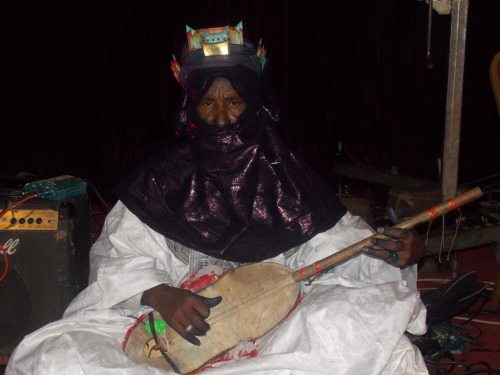
- Islamic Musical Traditions: Askia Muhammad’s promotion of Islam also had an impact on music. Islamic musical traditions, including religious songs and chants, became more prominent in the empire. These traditions blended with local musical heritage, creating a unique fusion that enriched the cultural tapestry of the region.
- Court Music: The royal court under Askia the Great likely featured musicians and performers who entertained the elite. Music played a role in courtly ceremonies. It was also present in celebrations and other official functions. This reflected the sophistication and cultural vitality of the Songhai Empire.
Legacy
Askia the Great’s patronage of the arts and music left a lasting legacy in West Africa. He promoted learning. He preserved cultural heritage. He supported artistic endeavors. These contributions led to the cultural renaissance of the Songhai Empire. This period of cultural flourishing greatly influenced subsequent generations. It shaped the artistic and musical traditions of the region for centuries.



 LISORO MAGAZINE