
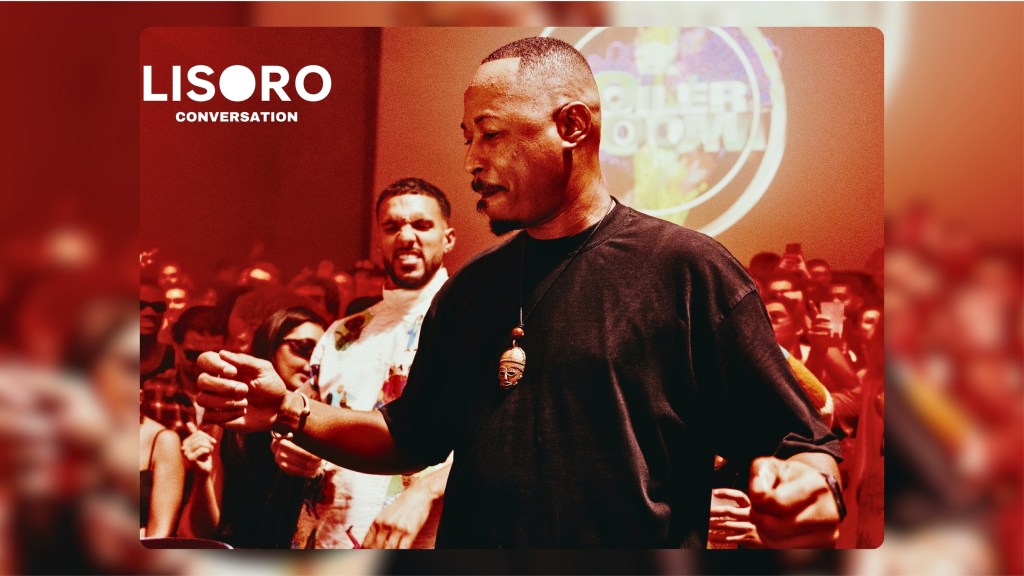
DJ Satelite is a seminal figure in the Angolan music scene, widely recognized for his pioneering contributions to both Kuduro and Afro House music. Born in Luanda, his early exposure to urban and traditional Angolan rhythms has led to a unique sound that has significantly shaped the musical landscape in his country and beyond.
Despite being somewhat underrated, DJ Satelite has been instrumental in propelling the visibility of Kuduro music on the global stage while also infusing Afro House with distinct African essences that resonate with audiences worldwide. His innovative approach combines dynamic beats with cultural storytelling, creating tracks that are not only danceable but also richly embedded with Angolan heritage.
DJ Satelite’s journey through music has been marked by his dedication to exploring new sounds while respecting the roots of Kuduro and Afro House. This commitment has seen him collaborate with numerous influential artists and contribute to the evolution of these genres with a modern twist. His new album is a testament to the vibrant power of Angolan music and its enduring impact on the world’s dance floors.
We strongly suggest you click below to listen/stream/purchase show love
Louro e Sal Vol.1 by DJ SateliteTHE CONVERSATION
LISORO: Can you describe the moment or experience that inspired you to finally compile and release “Louro e Sal Vol.1”?
DJ SATELITE: I’ve spent the last two years finishing my Afro house album, but honestly, something didn’t quite fit with my musical history because I’ve always been recognized as someone who also nurtured the Kuduro genre and propelled music in Angola, and as a result, African electronic music as a whole. Amid the turbulence of months of work and many ups and downs, I needed to find my own balance and feel content with myself.
On April 7, 2024, I woke up and decided to compile tracks for my first album. It made sense to create a Kuduro project, breaking taboos and barriers. While the world was focused on Afro House, I chose to completely go against the grain. The compilation process was straightforward; I had various songs and calmly reviewed the projects, determined to finish everything by Sunday. I managed to do so, created a cover in a vintage style, and sent it to my mother. I also showed it to DJ Galio, who was very pleased and suggested creating several volumes, as this could technically be the first in a long series of albums.
I just want to be happy and create music that reflects this desire; ‘Louro e Sal Vol.1’ does exactly that. Now, my friends, family, and followers, please go stream or buy this project and don’t forget to leave a comment. Gazzzz! 🙂
LISORO: The album features a mix of unreleased tracks from the early 2000s and new exclusives. How did you decide which tracks to include in “Louro e Sal Vol.1”?
DJ SATELITE: Actually, it was straightforward because my mother has a very strong connection with this compilation. She was the one who retrieved some of the songs from a friend of mine. From there, sequencing the project was easy.

LISORO: “Canoa,” featuring Elenco de Nome and DJ Vamburgue, is highlighted as a track your mother loves. Can you share more about the significance of this song and any stories behind its creation?
DJ SATELITE: To discuss “Canoa,” I must bring up my brother DJ Vamburgue. He was there at the beginning, back when we were just kids. He played a key role in numerous recordings, working alongside another partner of mine, João Mora/Gelmiquesta, also known as Gelmiro Pireza. Over the recent years, he has been a driving force, constantly encouraging me to release Kuduro tracks.

João Mora/Gelmiquesta, also known as Gelmiro Pireza, directed the music video for ‘Kandongueiro 2000’. I need to mention both of them because they initiated the recording of “Canoa,” selected the artists, and assembled an impressive lineup from Marçal and Sambizanga. These two neighborhoods have always been closely linked, despite significant tensions between Os Lambas and Puto Lilas. This collaboration resulted in an energetic track featuring voices from the late Nagrelha dos Lambas, Tchu K, a lyrical genius, Pico Go, Puto Maluco, Puto Quenista, Liba, and Puto Touro. While some names might be missing, these contributors are fondly remembered. Although the song is 19 years old, it still feels fresh and vibrant.

This song’s significance is highlighted by the fact that my mother played a crucial role in organizing our studio. There were lines of people on the first floor of the building where we lived, extending down to the building’s entrance. We were just kids; my mother had to yell at everyone to keep things orderly. Without her intervention, many artists would not have had the opportunity to record with us at Seres Produções. It was chaotic, but my mother was instrumental in managing everything.
My parents were avid music lovers, and my mother, in particular, possesses a keen ear and extensive musical knowledge. She could have been a talent scout, as she can instantly predict what will resonate with audiences after a single listen. At night, she would fall asleep to the radio, only to share insights about potential new hits on the Angolan market the following morning. She was particularly fond of “Canoa,” proclaiming it not only a great track but also the finest piece I’ve ever produced. Indeed, we shared her sentiment; moreover, it was she who rediscovered the MP3 after I had lost the original recordings.
I lost all the recordings on discs that were damaged by blight. At the time, I lacked the capability to store everything on HD and needed an external drive, which I didn’t have because we only had my father’s computer—it was a significant challenge.

Nevertheless, everything eventually fell into place when my mother, with the help of my friend DJ Paniko, managed to locate the song and sent it to me. Without hesitation, it became the first track on the album. My mother has been an integral part of my journey up to this point, continually discovering and sending me new music to explore. By year’s end, she had refreshed my playlist with the latest hits ‘from ‘da Banda’, making her support invaluable. A shoutout to my crew, and especially to my mother, Tany Mahapi, for all the laughs and love.


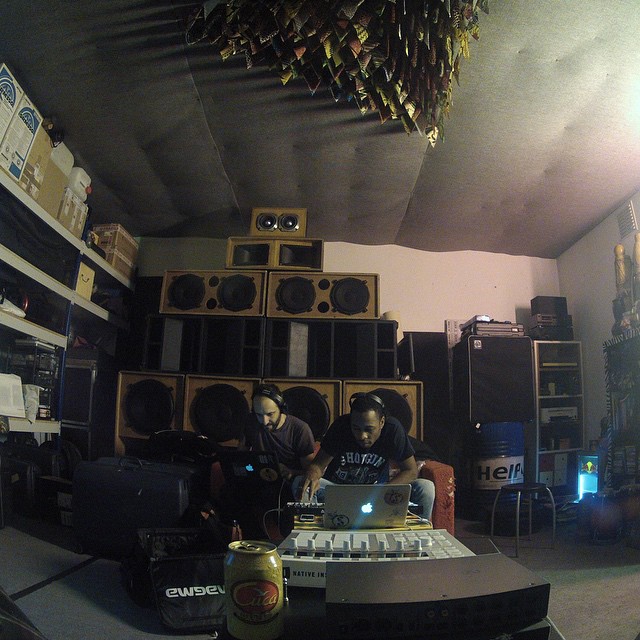


LISORO: Collaborations seem to be a vital part of this album, especially the track intended for Bruno M and the one with Nato P3. How do these collaborations enhance the album? How was it like working with these artists again?

DJ SATELITE: The collaborations are indeed essential. Bruno M and I regularly exchanged demos, reviewing and finalizing songs together, which is how several projects came to life. He not only listened but also actively shaped the beats. Vamburgue frequently offered insights, leading to exclusive beats with Bruno M. Although he has chosen not to sing nowadays, we still produce ‘hot mambos’ together.
Nato P3, a contemporary who often worked with Vamburgue and traveled with him, has been a formidable producer and Kuduro poet, similar to Bruno M. Interestingly, I had never recorded with Nato until “Lavra” emerged. I crafted a beat, presented it to him at my parents’ house, and we recorded the track on the spot.
LISORO: Looking back over the last 20 years, how do you think your experiences and the music scene have influenced the tracks on this album?
DJ SATELITE: The album has been influenced right from the start of my producing career. I’ve always thought 20 years ahead; those who read my interviews or watch them will realize that I’ve consistently been two decades ahead, always thinking about the future.
I sampled voices from the game ‘San Andreas’, and remarkably, the game still exists today. I am releasing music that includes these samples, maintaining their relevance as part of the franchise. I’m not a genius, but as my friend ‘Samar’ once told me, my name ‘Satelite’ isn’t just a coincidence; it symbolizes how I connect people through my music.




 LISORO MAGAZINE