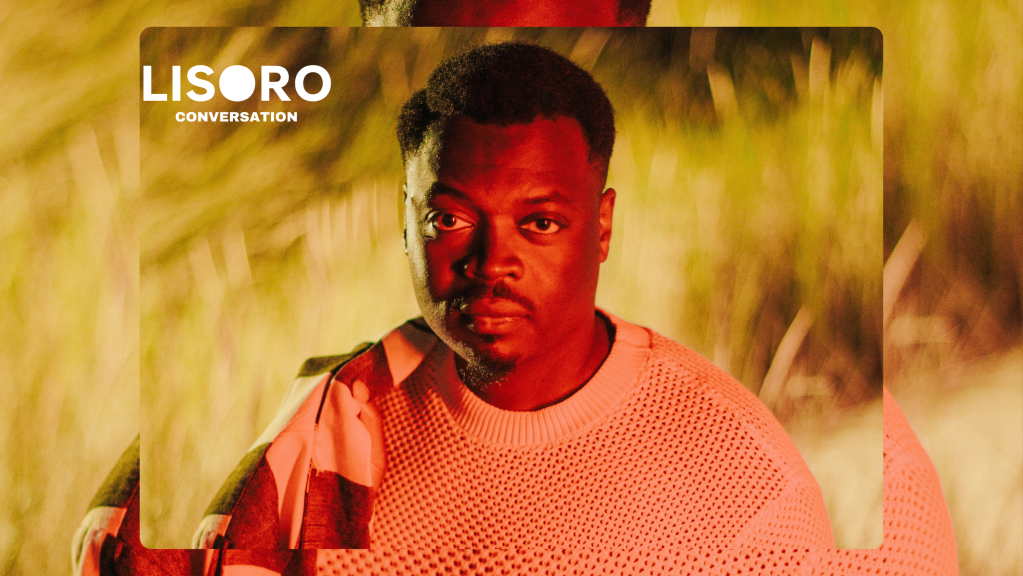
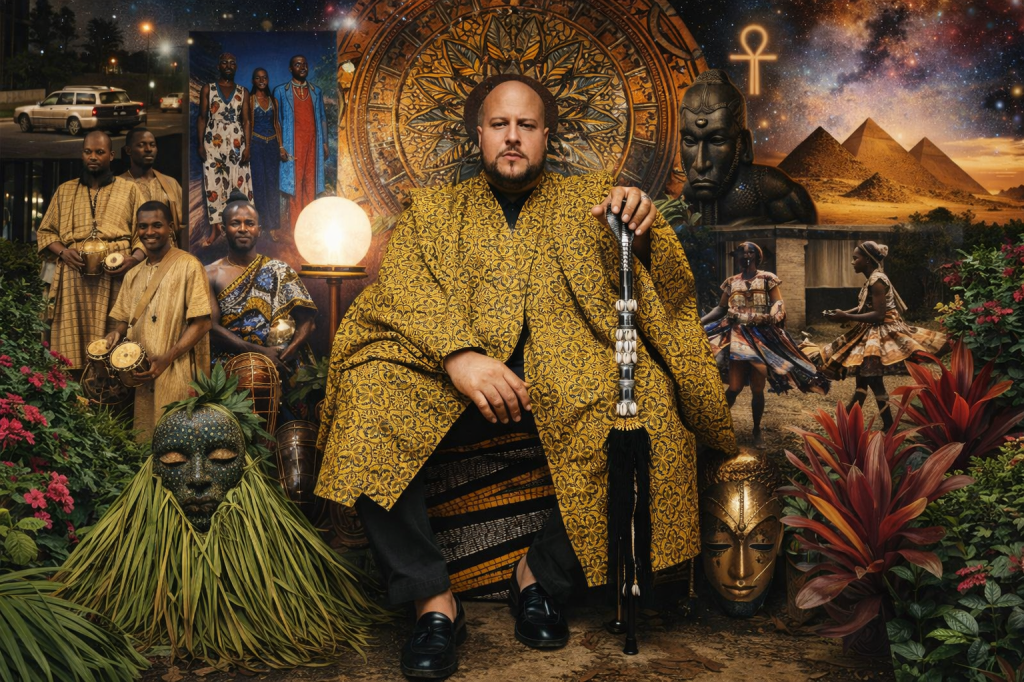
When I first crossed paths with Badi, it wasn’t just an encounter; it felt like a cosmic alignment destined to redefine the boundaries of Afropean music. Badi isn’t just a musician; he’s a storyteller whose roots deeply embed into the rich soil of the Democratic Republic of Congo, blossoming in the heart of Europe. This duality doesn’t confine him; instead, it fuels his fire, crafting narratives that resonate with both continents’ souls.
Badi’s journey through music can be qualified of a relentless pursuit of originality, authenticity and innovation. with 4 albums to his name, “Trouble Fête,” which I had the privilege to produce, is more than just a collection of tracks; it’s a manifesto awarded “Urban Music Album of the Year” by Belgium’s ‘Les Octaves de la Musique’ s’il vous plait.
Our collaboration on the track “Virgil Abloh” pays homage to the late fashion mogul and his groundbreaking journey, symbolizing African ingenuity and global influence. Badi’s lyrics through sharp wit and poignant references, manages to channel a message of empowerment and connection.
Badi’s contribution to the Belgian music scene extends beyond his lyrical prowess. His involvement with the BANXV clothing line is a testament to his multifaceted creativity and commitment to cultural expression. The line itself is inspired by the ingenuity and resilience of the Congolese people, a direct reflection of Badi’s heritage and his aspirations for his community.
What strikes me most about Badi is his mind, intellect, ethics and very sharp long term vision. He embodies the essence of being Afropean: rooted in African ancestry while shaping and being shaped by European culture. This blend of influences is evident not only in his music but in his approach to life and art.
As we continue to collaborate and create, I am constantly inspired by Badi’s vision and versatility. He doesn’t just rap, write and make music, he is a movement. Who would have thought that together, we’d get this far and continue to thrive for more as we humby give thanks for what has been achieved this far.
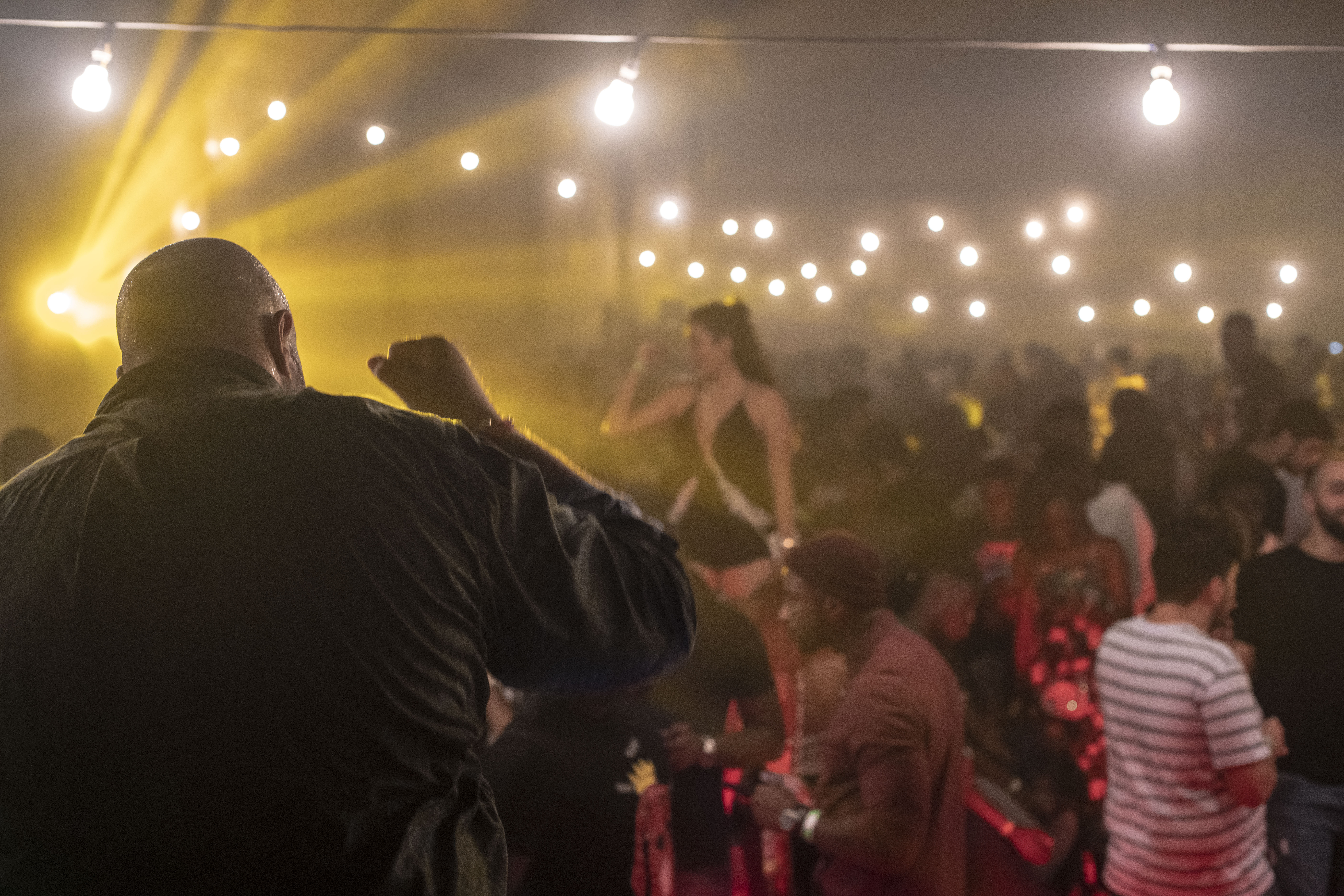
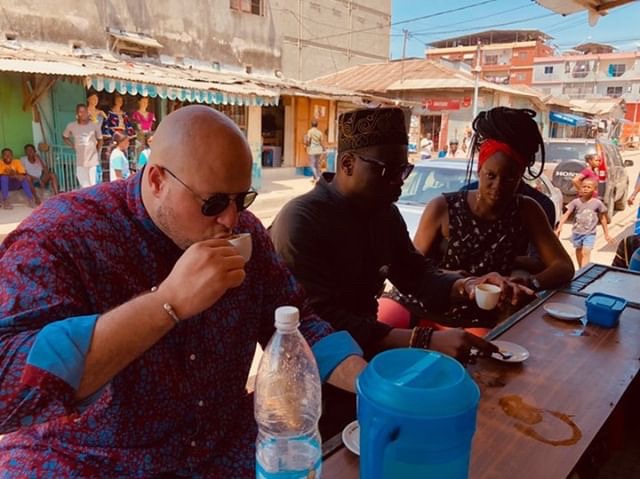

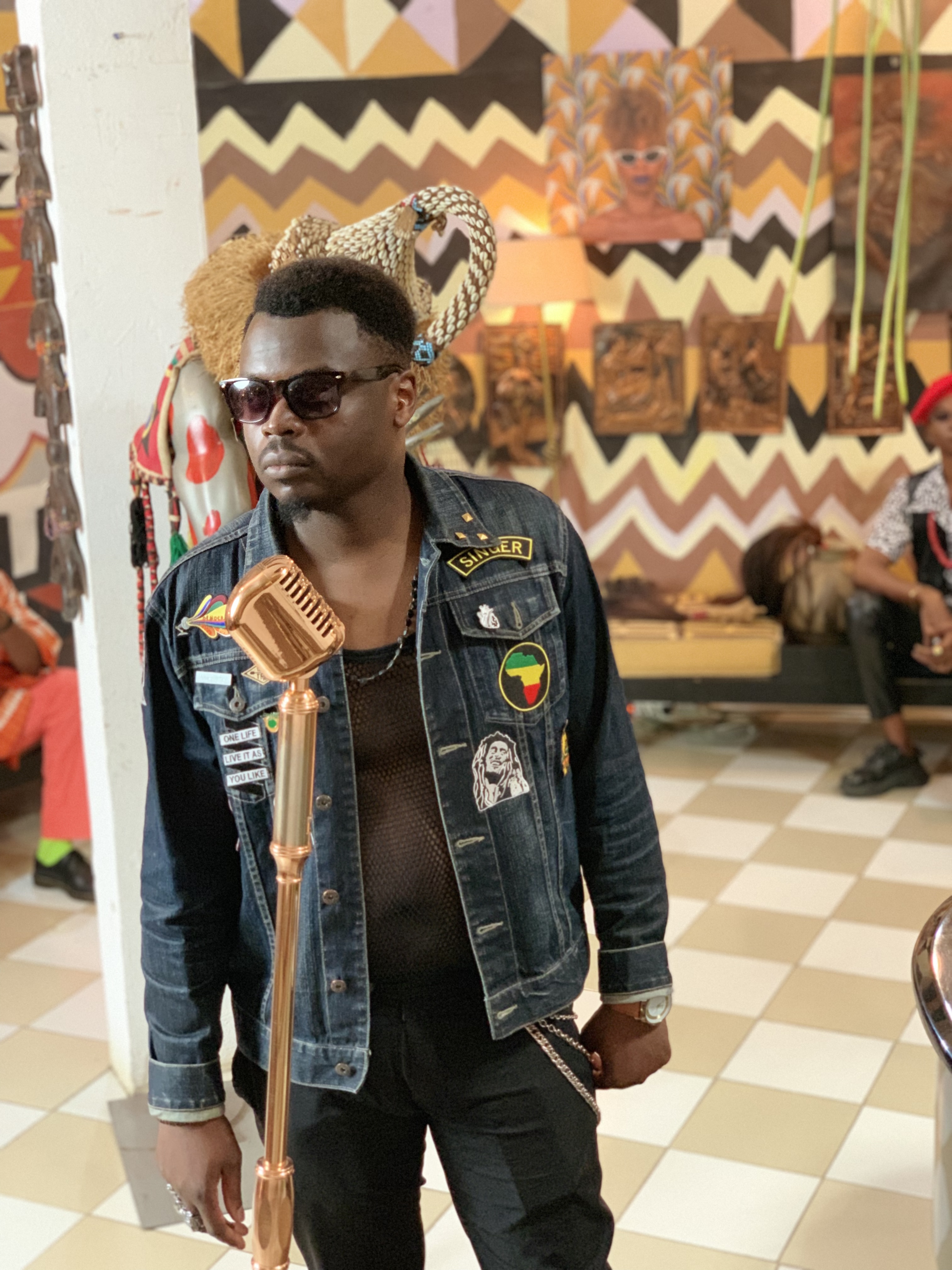


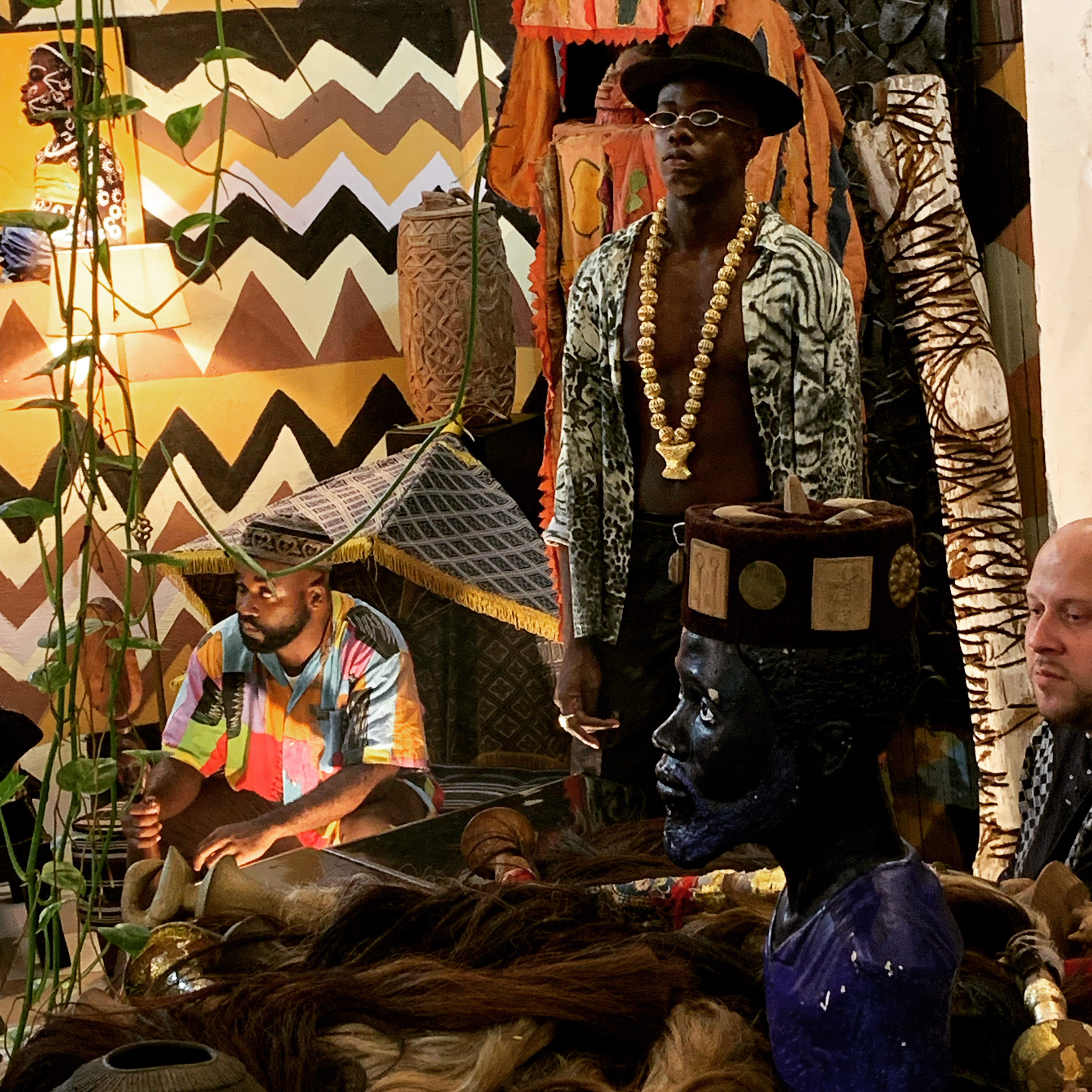


Photos: Bushman Café Abidjan & La Sunday
THE CONVERSATION:
BODDHI: Badi, can you share more about your early influences and what drove you to pursue music alongside exploring your Congolese roots and European upbringing?
BADI: Music has always been present for me since my early childhood, mainly thanks to my father who listened to a lot of Congolese music, as well as reggae, soul, and African-American music.
French songs were also present in our home, and I even had musicians in my family, notably my uncle, Papa Rondo, who was a saxophonist in Franco’s TP OK Jazz. He was a major influence on me, with his style and ability to bring the latest releases home.
Around the age of 10 or 12, I discovered hip-hop, first American, then French. That’s when I started writing lyrics. At the age of 14, I formed my first group in Brussels, and since then, music has been my passion. I say in one of my songs that ‘I never wanted to make music, but music made me.’ It was obvious to me that music would become my profession, especially rap. Over the years, I merged my Congolese and European influences in my music, seeking to create a unique style that reflects me, what I call ‘Badi’.”
“I believe that music is primarily something collaborative. We’ve seen beautiful and great collaborations among artists, such as Quincy Jones and Michael Jackson, or Dr. Dre and Snoop Dogg, or Gang Starr, DJ Premier, and Guru. I’ve always loved these kinds of collaborations where a producer and a singer or rapper come together to create a unique sound, and that’s really what I’m looking for.
BODDHI: Your collaborations, notably with me on “Trouble Fête,” have been groundbreaking. What do you look for in a collaborator, and how do you approach the fusion of different musical styles?
BADI: This body of work with you was a special experience and a pivotal moment in my career because I had worked a lot with the Soulstarz Muzeeq team before, and I wanted to introduce more electronic elements into my music. We were better known for hip-hop boombap with Congolese samples, but I wanted to stay true to the African universe that is dear to me while incorporating electronic elements like Afro house or that Boddhi Satva’s ancestral soul (Laughters). What I always search for is uniqueness, to create a special blend that people haven’t necessarily heard before.
With Trouble Fête, we found the right partnership, and that opened the doors to collaborations, with Jillionaire, for the album ‘Moyi – trop de soleil tue l’amour’. It shows that you have to take risks, not hesitate to share and collaborate on tracks. For me, that’s really the most important aspect.
BODDHI: The re-release of “MOYI (trop de Soleil Tue L’Amour)” has been much anticipated. Could you elaborate on the decision to re-release it and any new elements or messages you hope to convey?
BADI: From the beginning of the Moyi project, I intended to explore another dimension revolving around the moon, since Moyi means the sun. As I evolved, I ultimately revisited a book that I greatly appreciated, titled ‘Too Much Sun Kills Love,’ written by Mongo Beti. This title caught my attention because the main discussion I wanted to have was around the topics of love, my feelings, my relationship with women, and my relationship with myself. I truly wanted to explore different emotions, my romantic journey, and my friendships.
Because at some point, I realized that the thing people talk about the most is love. Relationships with one’s partner, children, and parents often constitute this great universal theme. By addressing love, I wanted to step away a bit from the perhaps sociopolitical axis that largely defined my texts until now. I sought to re-define myself personally by daring to speak about love, but always in my own way.
BODDHI: With your foray into fashion through BANXV, how do you see fashion intersecting with music, and what narratives are you aiming to express through this venture?
BADI: In developing and creating my clothing brand BANXV , I wanted to, similar to what I had already done musically, create a crossover between my personal story, which unfolds between Belgium and Congo, and this more hip-hop aspect in clothing known as streetwear.
Thus, BANXV truly represents the convergence of these three universes: my Congolese, European, and hip-hop sides blend through a brand, while also expressing the need to define one’s identity. That’s why the initial collections we launched are based on family photos taken from my parents’ albums.
We are evolving the brand towards other styles, towards more formal clothing that goes beyond just t-shirts and hoodies, while still being connected to these three elements: my personal story, Belgium, Congo, and the hip-hop world.
For me, clothing is an additional medium to add to my discourse, as it tells a story, especially through my Congolese origins where the sape movement holds great importance in our culture. It’s simply a creative extension of what I’m already doing musically, using clothing as another means of expression.
BODDHI: Lastly, being an Afropean, how do you navigate your dual heritage in your music and public life, and what message do you hope to impart to your audience regarding identity and cultural fusion?
BADI: It’s interesting as an Afro-European, or Afropolitan, or as I personally define myself, ‘Belgicain’. As a person of African origin, with black skin, we have two predominant examples of black people.
Generally, it’s the black person born in Africa, with all the clichés that can entail, or the African American, with all the clichés that come with that too. Defining oneself as Afro-European, I know it hasn’t been easy, because many people will say, ‘yeah, but no, we’re African’, or ‘we’re this’.
But for example, I was born, and only discovered Africa later in adulthood, even though Africa has always been within me. So, you have to find your place, and above all, a certain legitimacy. And I express it through music, with projects like Matongué, like Article 15, where I’ve delved a lot into this identity quest, and I almost want to say an initiatory quest, to be able to define myself. And I put that into my music.
Recently, it pleased me. Someone told me that through my music, I was able to put words to things they couldn’t express, because of their own history. That’s the most important message for me, that people can identify with, recognize themselves in it, and identification and recognition allow us to assume, by saying that we’re not alone, that my story, whilst unique, is shared by others, and they’re proud of their story, and that I can be proud of my story, proud of my journey, proud of my African roots, proud of my experience in Europe. It’s something that’s really important to me. It’s truly that sense of restored pride and self-love.



 LISORO MAGAZINE