
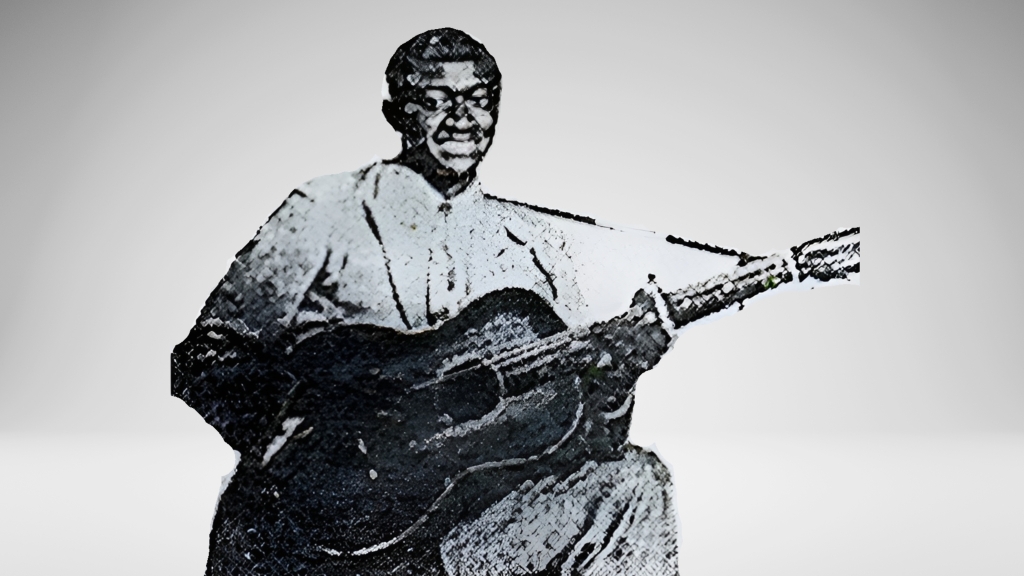
Zacharie Elenga, affectionately known as Jhimmy the Hawaiian, emerged as a defining force in the evolution of Congolese music, intertwining his fate with that of Paul Mwanga, a legendary composer, singer, and guitarist of Angolan descent. Their meeting in 1947 on Isoke Street in Kinshasa marked the beginning of a collaboration that would leave an indelible mark on the musical landscape of the Congo.
Jhimmy’s virtuosity on the rhythm guitar, combined with Mwanga’s compelling compositions and vocals, led to the creation of the Groupe Jhimmy na Mwanga. Together, they explored new dimensions of sound, harmony, and timbre, setting the stage for a musical revolution. Their partnership was instrumental in the founding of the Kina music editions, which, under the patronage of the Belgian Benatar brothers, evolved into the Opika label in 1950. This label became a beacon of innovation and creativity in Congolese music.
The duo’s early recordings, especially Mwanga’s “Iyaya naboi monoko ya mboka,” became classics of Congolese music, celebrated for their mastery and emotional depth. By 1950, Jhimmy and Mwanga solidified their influence with the formation of the Groupe Jhimmy na Mwanga, earning acclaim across Africa and inspiring a generation of musicians with hits like “Onduruwe” (maboko likolo), “Henriette,” “Putulu,” and “Viva Benatar.”
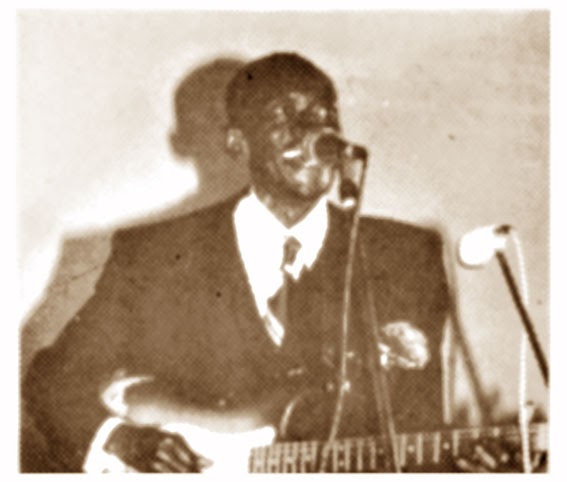
Jhimmy’s introduction of the Hawaiian guitar tuning in 1950 marked a pivotal moment in Congolese music, infusing traditional rhythms with the fox-trot and other dance styles previously unfamiliar to Congolese audiences. His innovative use of voice as an instrument further demonstrated his musical ingenuity, creating a dynamic and captivating listening experience.
The period from 1950 to 1952, known as “L’ère Jhimmy,” saw the expansion of their group with talented musicians, including Charles Mwanga aka Dechaud and Antoine-Emmanuel Tshilumba Baloji aka Tino Baroza, further cementing their legacy in the music world. Jhimmy’s reign over the music scene was described as that of an absolute monarch, with his influence extending beyond the Congo to the neighboring colonies.
However, the partnership between Jhimmy and Mwanga faced challenges, culminating in a split in 1953 over disputes related to song copyrights. After ending his musical career in 1954, Jhimmy returned to Brazzaville, where he continued to share his musical talents with the Atomic Jazz group, showcasing a new dimension of his artistry.
In the early 1990s, Jhimmy relocated to Bangui, Central African Republic, where he would spend his final days. Despite his departure from the music scene, Jhimmy’s legacy as a pioneer of modern Congolese music and one of the fathers of Congolese Rumba endures, celebrated for his innovative contributions and the profound impact he had on the genre.
Paul Mwanga, following the dissolution of their partnership, continued to make his mark in music with the formation of Affeinta Jazz, perpetuating the rhythmic spirit of Congo. His legacy, alongside Jhimmy’s, remains a testament to their profound influence on Congolese music, leaving behind a rich discography that continues to inspire musicians and listeners alike.



 LISORO MAGAZINE